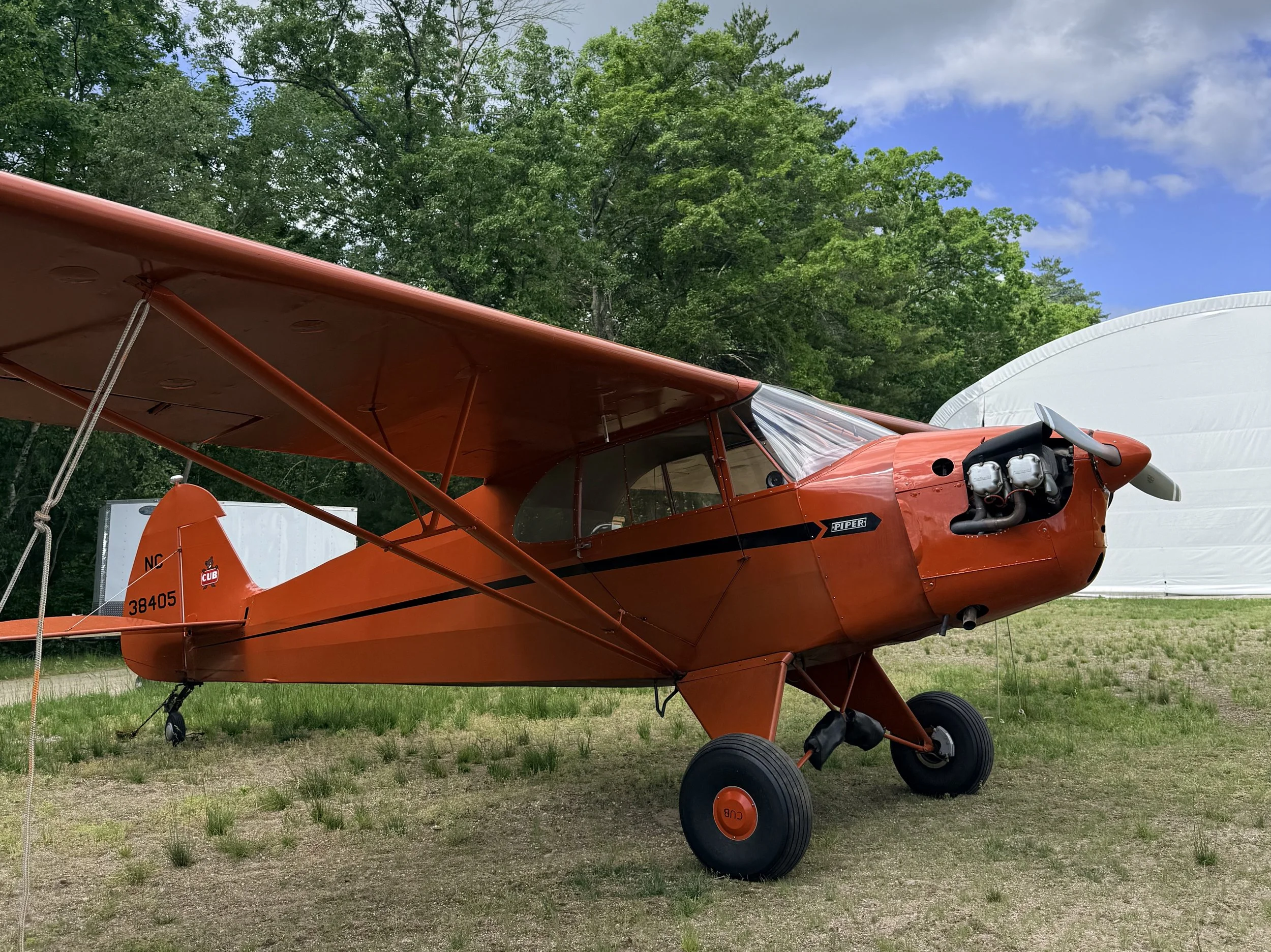
Learn to Fly the Classic Way
Sport pilot flight training, discovery flights, and tailwheel instruction in a 1941 Piper J‑5A Cub Cruiser at Crow Island Airpark in Stow, Massachusetts.
Blue Collar Aviation Flight Training
There’s something special about learning to fly a vintage Piper from a grass airstrip. In our 1941 Piper J‑5A Cub Cruiser, you’ll learn to look outside, recognize what the airplane is doing, and fly it with smooth, coordinated control inputs. It’s classic stick-and-rudder flying, and the skills you build carry over to other airplanes.
Instruction is one-on-one and tailored to your experience and goals. You’ll learn to manage airspeed and energy, coordinate the stick and rudder, and use outside visual references. As you progress, you’ll practice slow flight, stall recovery, takeoffs and landings, and crosswind techniques. Along the way, you’ll develop the judgment that goes with good aircraft control, from planning a flight and spotting traffic to recognizing when to go around.
Why Train for a Sport Pilot Certificate?
A sport pilot certificate can be a more economical way to become a pilot, especially if your goal is recreational flying. The FAA’s minimum flight-time requirement is lower than it is for a private pilot certificate, which can help keep training costs down. Your total training time will depend on your progress and how often you fly.
If you picture yourself taking a morning flight over New England, bringing a friend along, or visiting a nearby airfield for breakfast, a sport pilot certificate is a practical way to get there. It can also be a stepping stone to a private pilot certificate and further training. You can start with the kind of flying you want to do today and build on that experience as your goals evolve.
More Airplanes to Fly Under MOSAIC
The FAA’s MOSAIC rule expanded sport pilot privileges in October 2025. Sport pilots can now fly a wider range of airplanes, including eligible four-seat models such as certain Cessna 172 Skyhawks and Piper Cherokee 140s. Sport pilots can carry one passenger, even in an eligible four-seat airplane.
Eligibility depends on the specific airplane and its certification data. One of the FAA’s criteria is a clean stall speed of 59 knots calibrated airspeed or less. With the required training and endorsements, sport pilots can also fly eligible airplanes with retractable landing gear or manually controllable-pitch propellers.
Flight Training and Services
Sport Pilot Flight Training — Personalized primary instruction with an emphasis on aircraft control, takeoffs and landings, and sound decision-making.
Discovery Flights — Take an introductory flight with an instructor and get a feel for flying the Cub Cruiser.
Tailwheel Training and Endorsements — Build proficiency in tailwheel taxiing, crosswind control, and three-point and wheel landings.
Flight Reviews — Review flight planning, procedures, and maneuvers with an instructor who tailors the review to the kind of flying you do.
Stick-and-Rudder Refresher Training — Sharpen your aircraft control, rebuild landing confidence, or get more comfortable flying in crosswinds.
Ready to fly? Contact Blue Collar Aviation to schedule a discovery flight or talk about your training goals.